Lawrenceville water customers have been served by Gwinnett County DWR since late 2020, and the county lists its water at about 1.34 grains per gallon on average, which is soft. Most homes need a filter or service, not a softener. Call the number on this page to be connected with a local plumber in Lawrenceville.
How it goes when you call
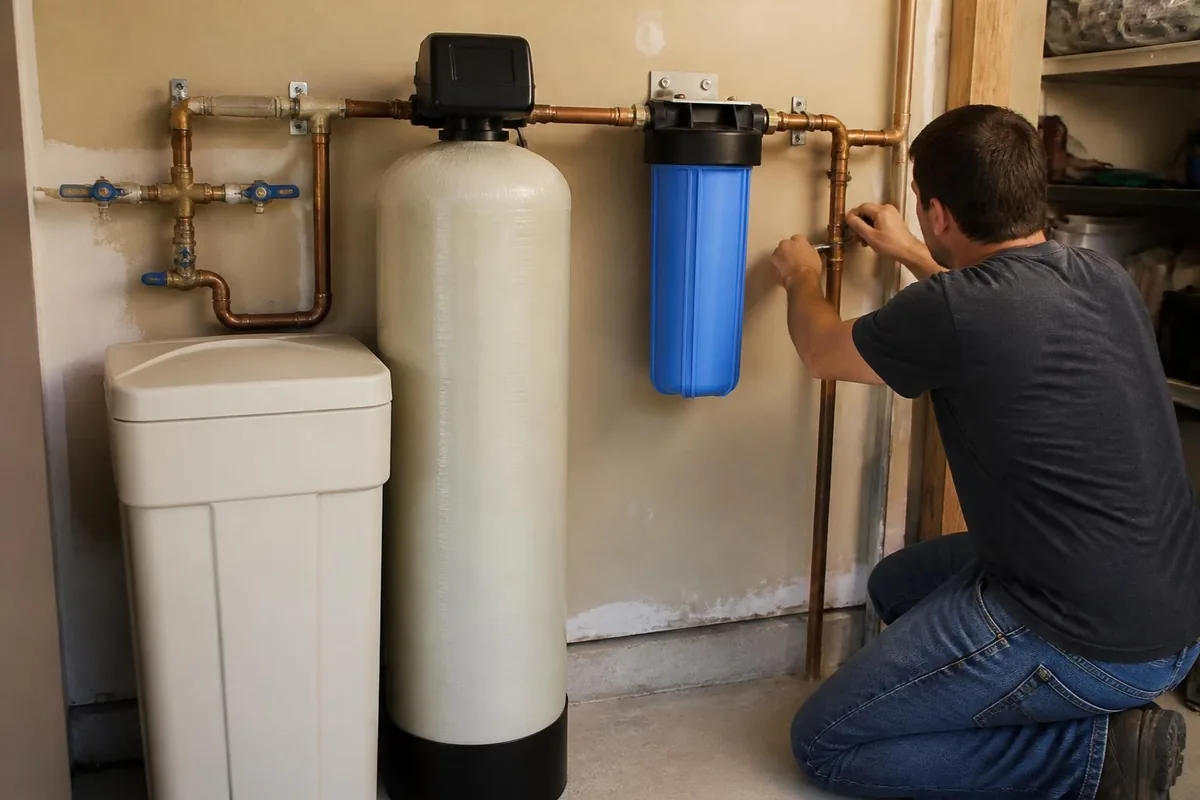
You'll reach an independent plumber who serves Lawrenceville. Tell them what you notice, whether there's already a softener or filter, and whether the home is on municipal sewer. That last point matters, because some Lawrenceville properties are not on municipal sewer and use a private onsite wastewater system, and softener brine discharge needs to be planned around that.
On site, the plumber can confirm hardness, check any existing equipment and the water heater, and suggest the simplest fix.
What changes the cost
- Servicing, removing or replacing an existing softener
- Carbon filtration for the whole house or one tap
- Drain routing, especially on a private onsite system
- Access to the main line and power
- Cartridge and media replacement over time
Lawrenceville's water
Gwinnett County bought the City of Lawrenceville's water distribution system and took it over on December 1, 2020. Water customers now get service and billing from Gwinnett DWR, while the city still bills for natural gas, electric and sanitation. Water comes from Lake Lanier through Gwinnett's Shoal Creek and Lanier filter plants and is chlorinated; the county adds fluoride. Gwinnett lists total hardness at 1.05 to 1.87 grains per gallon, averaging 1.34, which is soft.
So a softener is rarely the answer here. Chlorine taste is a carbon filter job. Grit or rust usually traces to a water heater or older piping; the median home dates to 1988, and about 30% were built before 1980. Gwinnett keeps a service line material inventory you can check at GwinnettCounty.com/ServiceLines. The city's Planning & Development office has a Building Official; ask your plumber how permits are handled for your job.
Checklist before the visit
- Know whether your home is on sewer (check your Gwinnett bill)
- Find the main shutoff and clear the area
- Note the water heater's age
- Look up your service line material
- Check whether an existing softener still has salt and runs on schedule
With that in hand, the plumber can usually say quickly whether the job is a filter install, removing an unneeded softener, or a water heater or pipe repair that no treatment would solve.
Water Softeners & Filtration questions in Lawrenceville
Is Gwinnett County water hard or soft?
Where does softener discharge go if my home is not on municipal sewer?
Does my home need both a softener and a filter?
Should I check my service line before adding filtration?
More plumbing services in Lawrenceville
Water Softeners & Filtration nearby
Helpful guides
Sources
Last updated: