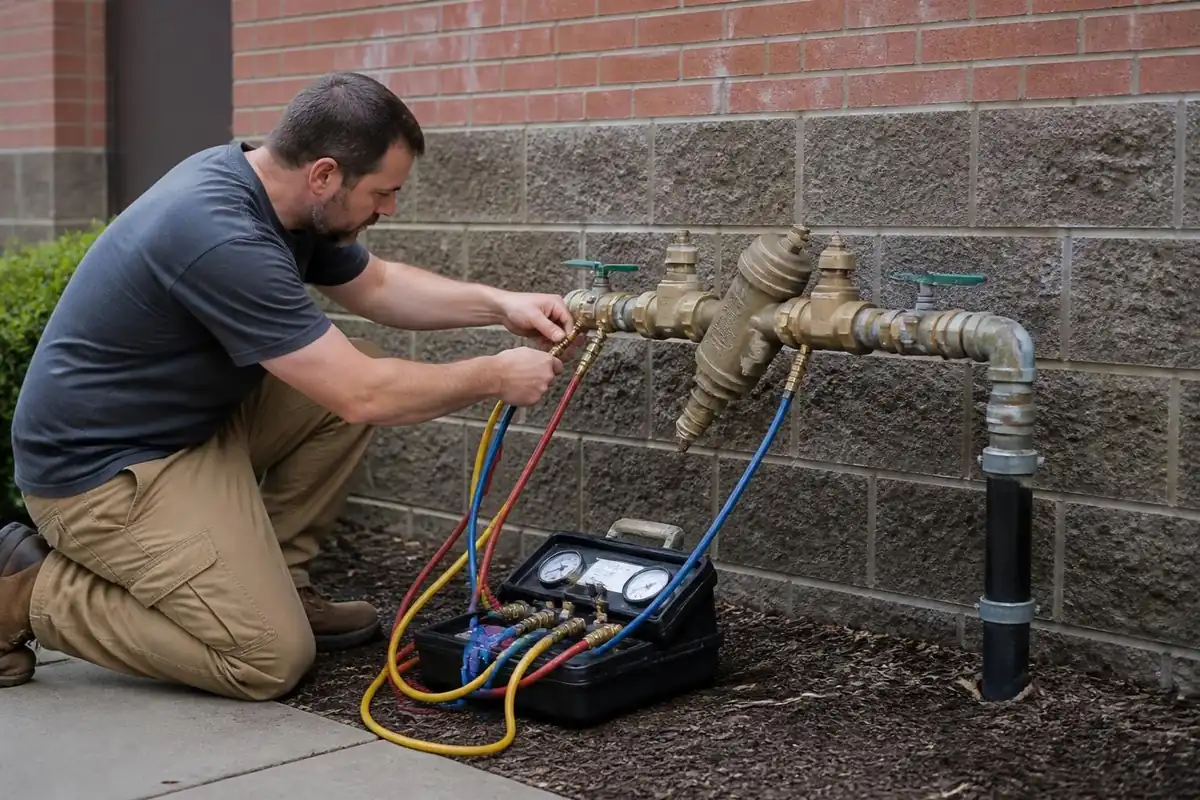
The City of Atlanta requires a backflow prevention assembly at every commercial water customer and at some homes, such as those with irrigation systems, and test reports must be filed by a registered tester through DWM's backflow compliance program. A tester checks that the assembly still stops water from flowing back into the public system. Call the number on this page to be connected with a local plumber in Atlanta, and confirm the tester is on the City's registered list before you book.
What backflow is and why the City cares
Water is supposed to move one way, from the public main into your building. When pressure in the main drops, as it can during a main break or heavy firefighting draw, water inside private plumbing can be pulled backward. A garden hose resting in a bucket of fertilizer or a sprinkler zone sitting in puddled soil is enough to let contaminants reach the drinking water supply. A backflow prevention assembly is the mechanical barrier that stops that reverse flow.
Who has to have one in Atlanta
- Commercial customers: every commercial water account needs an assembly.
- Some residential customers: homes with irrigation systems or certain home-based businesses can be required to have one.
- Location: the assembly sits on the customer's property near the meter box or just inside the building, ahead of the first branch line.
The program is run by DWM's Environmental Compliance Section. If you are not sure whether your property is covered, the City's backflow compliance page is the place to check.
How testing and reporting work
Only registered backflow testers can submit results, and they file them through the SwiftComply system rather than handing paperwork to the owner to mail in. DWM publishes a list of registered testers, and a fee applies when a passing test is submitted. Ask the plumber you are connected with whether they are registered or will bring in someone who is, and how the filing fee is handled. The City's page does not give a single retest interval, so follow any notice DWM sends you about when your next test is due.
What happens during the visit
- The tester shuts off the water briefly at the assembly.
- A differential pressure gauge is attached to the test cocks.
- Each check valve is checked for holding tight, and any relief valve for opening at the right point.
- A passing result is filed; a failed one gets repaired and retested.
Failures usually come down to debris on a seat, a worn rubber part or a cracked body from freezing. Small parts kits fix many of them. Older or damaged assemblies may need full replacement, and replacement plumbing at a home generally falls under a technical permit from the Office of Buildings.
What affects the cost
Pricing depends on how many assemblies the property has, their type and size, how easy they are to reach, the filing fee, and whether a failed device needs a repair kit or replacement.
Backflow Testing questions from Atlanta homeowners
Does my Atlanta home need a backflow preventer?
Who can test my backflow assembly?
How are results reported to the City?
How often is testing required?
Related plumbing services in Atlanta
Helpful guides
Backflow Testing in nearby cities and towns
Fulton County
DeKalb County
Cobb County
Gwinnett County
Clayton County
Cherokee County
Forsyth County
Paulding County
Douglas County
Fayette County
Henry County
Coweta County
Bartow County
Spalding County
Sources
Last updated: