When a sump pump quits, the cause is usually one of four things: no power, a stuck float switch, a failed check valve or a worn-out motor. The first three are normally repairable, while a dead motor typically means a new pump. Call the number on this page to be connected with a local plumber in Atlanta who can sort out which one you are facing.
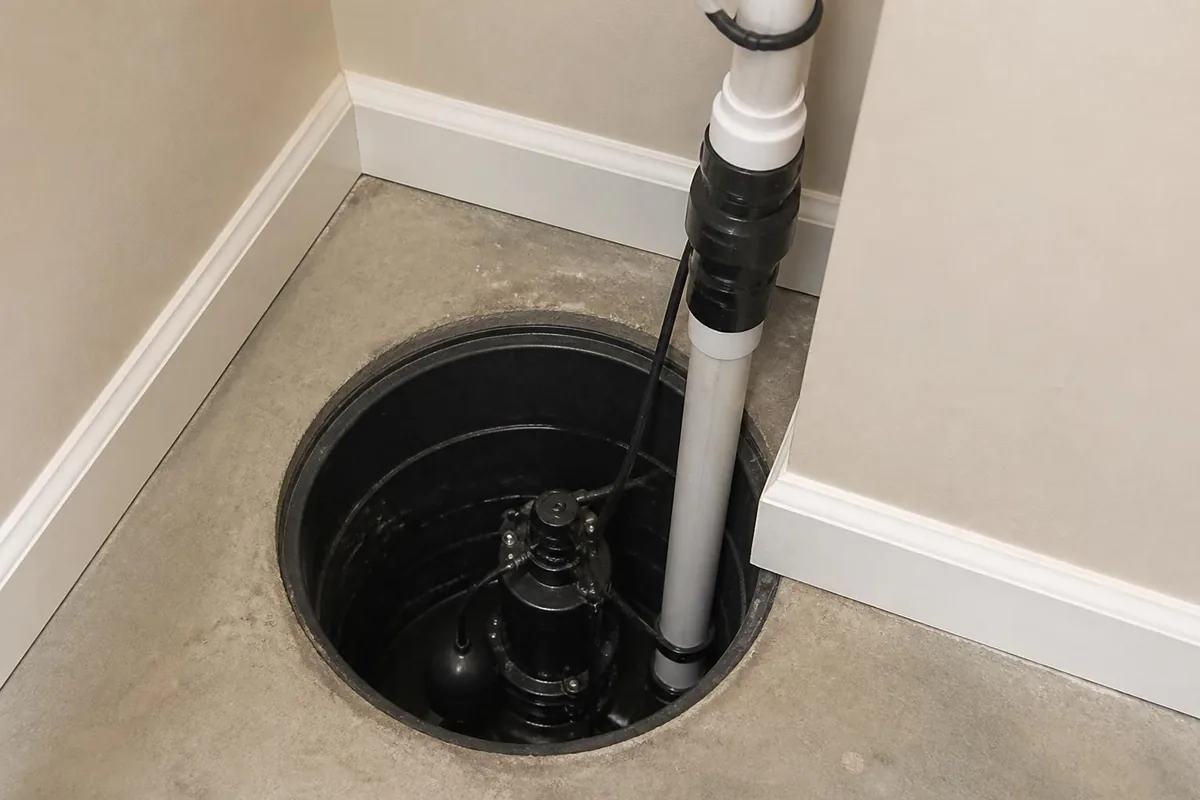
How a failing pump tends to act
| Symptom | Likely reason |
|---|---|
| Motor hums, pit level stays put | Impeller jammed with debris or a clogged inlet screen |
| Pump kicks on and off in quick bursts | Float set too tight, a bad check valve, or a basin that is too small |
| Water flows back down the pipe after shutoff | Check valve missing or stuck open |
| Nothing at all when the float rises | Tripped GFCI, breaker or a failed switch |
| Loud rattle, grinding or a hot smell | Bearings or motor wearing out |
Test it before the next heavy rain
Pumps that sit dry for weeks are the ones most likely to stick when a storm finally fills the pit. With the cord unplugged, check that nothing is resting against the float. Plug it back in, then pour a bucket of water slowly into the basin. The pump should switch on, drain the pit and switch off on its own. If it stays silent, reset the GFCI outlet and check the breaker before you call anyone.
Is the pump really the problem?
Plenty of Atlanta houses never need a sump pump. The city's median home was built in 1989, and many newer houses sit on slabs or dry crawl spaces. Pumps come up more in homes with basements, in crawl spaces where water pools after storms, and on lots that slope toward the foundation. Roughly 43% of Atlanta homes were built before 1980, and in older intown houses a damp crawl space is sometimes fed by clogged gutters, short downspouts or poor grading rather than groundwater. A plumber can tell you whether the fix belongs in the pit or outside the house.
Discharge line basics
The water a sump pump moves is groundwater and runoff, so it should be sent out into the yard well away from the foundation, not dumped next to the wall where it soaks right back in, and not onto a neighbor's lot. It also should not be tied into a floor drain, laundry line or sewer cleanout, because sanitary sewers are not meant to carry stormwater. In Atlanta, the Department of Watershed Management handles water, wastewater and stormwater as separate services.
Backup options
When the storms that fill the pit also cut the power, a battery backup pump is worth a conversation. A water-powered backup runs off household water pressure, so that connection needs backflow protection to keep pit water out of the drinking supply.
What drives the price
Cost depends on whether one part or the whole pump is replaced, the pump's capacity and type, how easy the pit is to reach, any rerouting of the discharge line, and whether a backup system is added.
Sump Pumps questions from Atlanta homeowners
Why is my sump pump still running days after it rained?
Can I run my sump pump discharge into the sewer?
Does every Atlanta crawl space need a sump pump?
What should I do if the pump dies in the middle of a storm?
Related plumbing services in Atlanta
Helpful guides
Sump Pumps in nearby cities and towns
Fulton County
DeKalb County
Cobb County
Gwinnett County
Clayton County
Cherokee County
Forsyth County
Paulding County
Douglas County
Fayette County
Henry County
Coweta County
Bartow County
Spalding County
Sources
Last updated: