Snellville has a mix of 1970s and older homes and 1980s and 1990s subdivisions, so repipes here range from galvanized replacements to polybutylene swaps. A plumber replaces pipe from the Gwinnett meter to every fixture. Call the number on this page to be connected with a local plumber in Snellville.
Snellville at a glance
Snellville's median home was built in 1991, and roughly 30% of housing predates 1980, under Census survey data. Older houses along US 78 and in established neighborhoods like Nob Hill may still have galvanized or early copper; homes from the 1980s and early 1990s are the ones to check for polybutylene.
Gwinnett County Water Resources supplies Snellville with soft, chlorinated Lake Lanier water. Everything on the customer's side of the meter is the owner's to maintain, repair or replace. Snellville issues its own building permits and does its own inspections; plumbing subcontractors file affidavits, and the city has a local plumbing code amendment with water efficiency requirements.
What to do now
- Run a quick meter check: turn off every fixture and see whether the meter still moves.
- Check what Gwinnett has on file for your service line at GwinnettCounty.com/ServiceLines.
- Note the pipe material at the water heater: copper, gray steel, gray plastic, cream plastic or colored tubing.
- List the fixtures in the house, including outdoor spigots and the ice maker line.
- Ask household members which taps run weak, rusty or slow to get hot.
Symptoms and likely causes
| Symptom | Likely cause |
|---|---|
| Rusty or brown water from several taps | Corroding galvanized steel inside the walls |
| Grit in aerators again and again | Scale and rust breaking loose inside old pipe |
| Tiny wet spots on copper, often hot side | Pinhole corrosion in aging copper |
| Stains on a ceiling under a bathroom | Leak on a supply branch above |
| Toilet tank fills slowly | Restricted supply from scaled or narrowed pipe |
| Gray plastic pipe or fittings that crack | Polybutylene nearing the end of its life |
| Temperature swings in the shower | Undersized or restricted supply lines |
What drives the price
- Number of stories: a second floor or a bonus room over the garage lengthens runs and adds access points.
- Wall and ceiling finishes: tile, plaster and finished ceilings slow the work and raise the patching bill.
- Foundation type: slab houses are usually repiped through the attic and walls, while crawl-space houses can be routed from below.
- Permits and inspections: rough-in and final inspections set the pace of the job.
- Patching after the work: some quotes include drywall patching and others stop at rough repair, so ask.
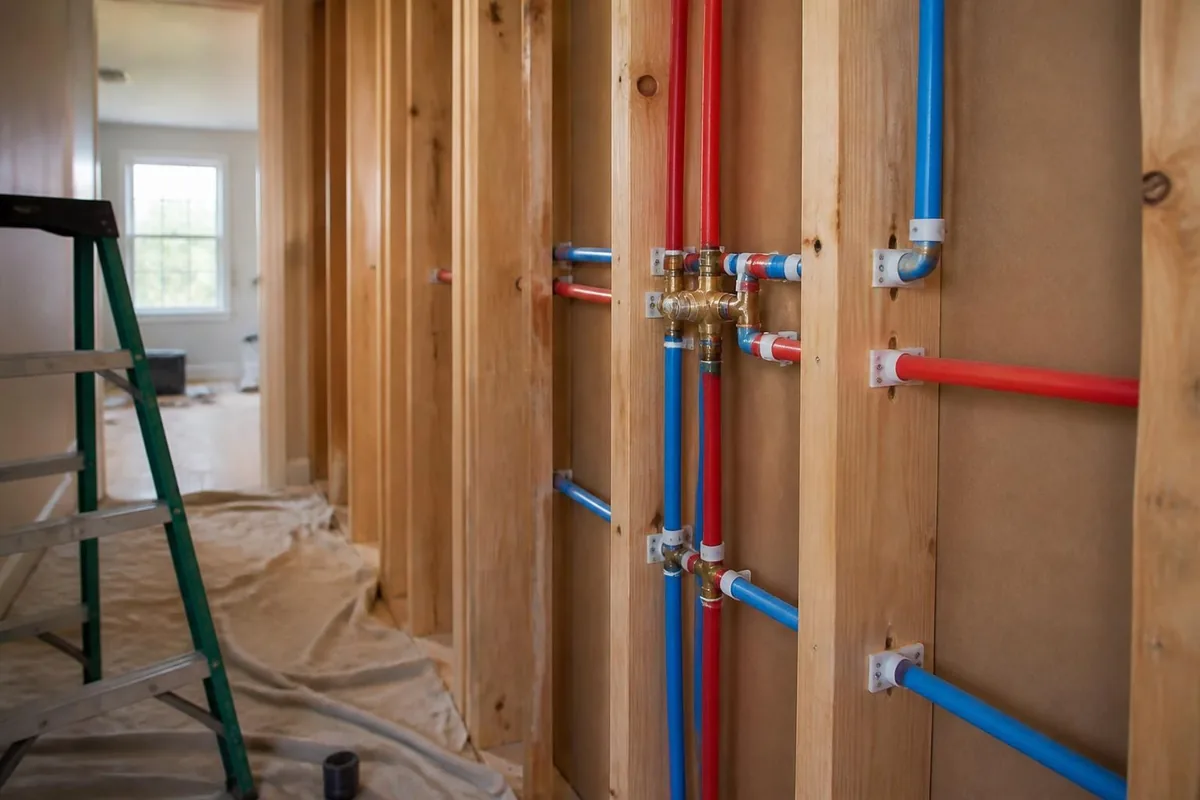
- Pipe material: PEX usually takes fewer labor hours than soldered copper, and CPVC sits somewhere between.
- Distance from the meter: a long driveway or a house set far back from the street lengthens the service line.
- The yard line: adding the buried pipe from the meter to the house means trenching or boring across the lot.
Repiping questions in Snellville
Should polybutylene pipe come out even if it isn't leaking?
Why does old galvanized pipe lower water pressure?
Does the utility's service line inventory cover the pipes inside my home?
Can we stay in the house while the pipes are replaced?
More plumbing services in Snellville
Repiping nearby
Sources
Last updated: